A search for “makeup manufacturer UK” usually reflects two separate questions: where the product will be made, and whether the supplier can support the requirements of the UK market. The factory’s location is only one part of the decision. You also need to assess its experience with your product category, its development and quality processes, and its ability to meet your packaging, compliance, cost and launch requirements.
Before you approach suppliers, prepare a clear product brief. Include the product format, target consumer, finish, shade direction, estimated order quantity, target cost, target market and planned launch date. Use the nine checks below to compare each manufacturer against the same brief. When a supplier mentions certifications, regulatory support or production capacity, ask for current evidence and details that apply to your project.
UK production or overseas manufacturing for UK brands?
The term “makeup manufacturer UK” may refer to a manufacturer based in the United Kingdom or to an overseas manufacturer that develops and produces cosmetics for UK brands. These two routes can differ in logistics, lead times, communication, country-of-origin information and market documentation. Define the route you need before comparing supplier quotations.
| Manufacturing route | When it may fit your project | What to confirm |
|---|---|---|
| UK-based manufacturing | Local production, factory visits or domestic logistics are important to your launch plan. | Product categories, formulation and packaging capabilities, capacity, MOQ and lead time. |
| Overseas manufacturing with UK-market support | You are open to international production and want to consider a wider range of formulation, packaging and production options. | Exact production country, manufacturing entity, export terms, shipping costs, quality records and responsibility for UK documentation. |
A UK office or sales contact does not mean that the product is manufactured in the UK. Ask where formulation, filling, assembly and final quality inspection take place. Record the agreed manufacturing location, export terms and responsible parties in the quotation and project specifications.
1. Check experience with your product category
A makeup manufacturer’s experience should match the product you plan to launch. A supplier that mainly produces skincare may have limited experience with high-pigment lip formulas, tubing mascara or multi-shade foundation. Requirements also vary within a category: a lip tint, balm and gloss each call for different formula, applicator and packaging decisions.
Ask which product formats the manufacturer currently produces and what it handles during development and production. It does not need to name confidential clients, but it should be able to explain relevant experience in practical terms.
For mascara, ask how the formula, brush, wiper and tube are evaluated together. For complexion products, ask how the team approaches undertones, shade depth, coverage and on-skin review. These details will tell you more about a manufacturer’s category experience than a broad product list.
2. Confirm the formula development and sampling process
Whether you work with a private label, OEM or ODM makeup manufacturer, ask how the project will move from your initial brief to an approved sample. Clarify what information the supplier needs, what the first sample is intended to demonstrate, how feedback and revisions are handled, and when the formula, packaging and testing requirements will be confirmed.
A reference product can help explain the texture, finish, colour payoff or application you have in mind. Treat it as a guide to the product direction, not a promise that the manufacturer can reproduce the exact formula. Ask the supplier to explain which characteristics it can target and how each sample will be assessed.
Agree on the review criteria before sampling begins. For a lip oil, you might assess glide, shine, tack and colour payoff. For foundation, you might focus on coverage, undertone, blendability and finish. Specific feedback helps the development team understand what needs to change in the next sample.
3. Set clear standards for shade, texture and performance
Colour and finish need to be defined in terms that both your team and the manufacturer can evaluate consistently. A shade may look different in the package, in a swatch and after it has been blended or worn. Before approving samples, agree on the reference, application method, viewing conditions and acceptable variation.
The same applies to claims such as long-wear, transfer-resistant, waterproof, buildable or fragrance-free. Define what you expect from the product and ask what testing or supporting evidence is needed before using a claim on the packaging or in marketing.
For a shade range, ask how each shade will be developed, reviewed and approved. Confirm how the approved shade reference will be retained and compared with production batches and future reorders. If the manufacturer uses instrumental colour measurement, ask which method and equipment are used, under what viewing conditions the comparison is made, and what tolerance applies. A colour difference number is difficult to assess without this information.
Record these decisions in the product specification. It should cover the approved formula, shade references, texture, finish, packaging components and agreed performance criteria, so your team and the manufacturer are working to the same standard.
4. Review formula and packaging compatibility together
The formula needs to be evaluated with its intended packaging. For a lip makeup formula, the wiper and applicator can affect product pickup and application, while the container and closure can affect leakage. A component that looks right in a mock-up may not work as expected after filling or storage.
Ask when the formula will be tested with the packaging selected for production. Confirm which checks apply to your product, such as leakage, dispensing, changes in texture or appearance, and closure or applicator performance after storage and transport. Before approving production, establish who supplies the components, who reviews the results and who signs off the final formula and packaging combination.
If you are supplying your own packaging, provide component drawings and physical samples early enough for the manufacturer to assess filling and compatibility.
5. Understand batch quality control after sample approval
The approved sample, often called the “golden sample,” gives the production team a physical reference. A written product specification records the corresponding formula, shade, texture, fill quantity and packaging. Confirm which characteristics will be checked during production and what variation is acceptable.
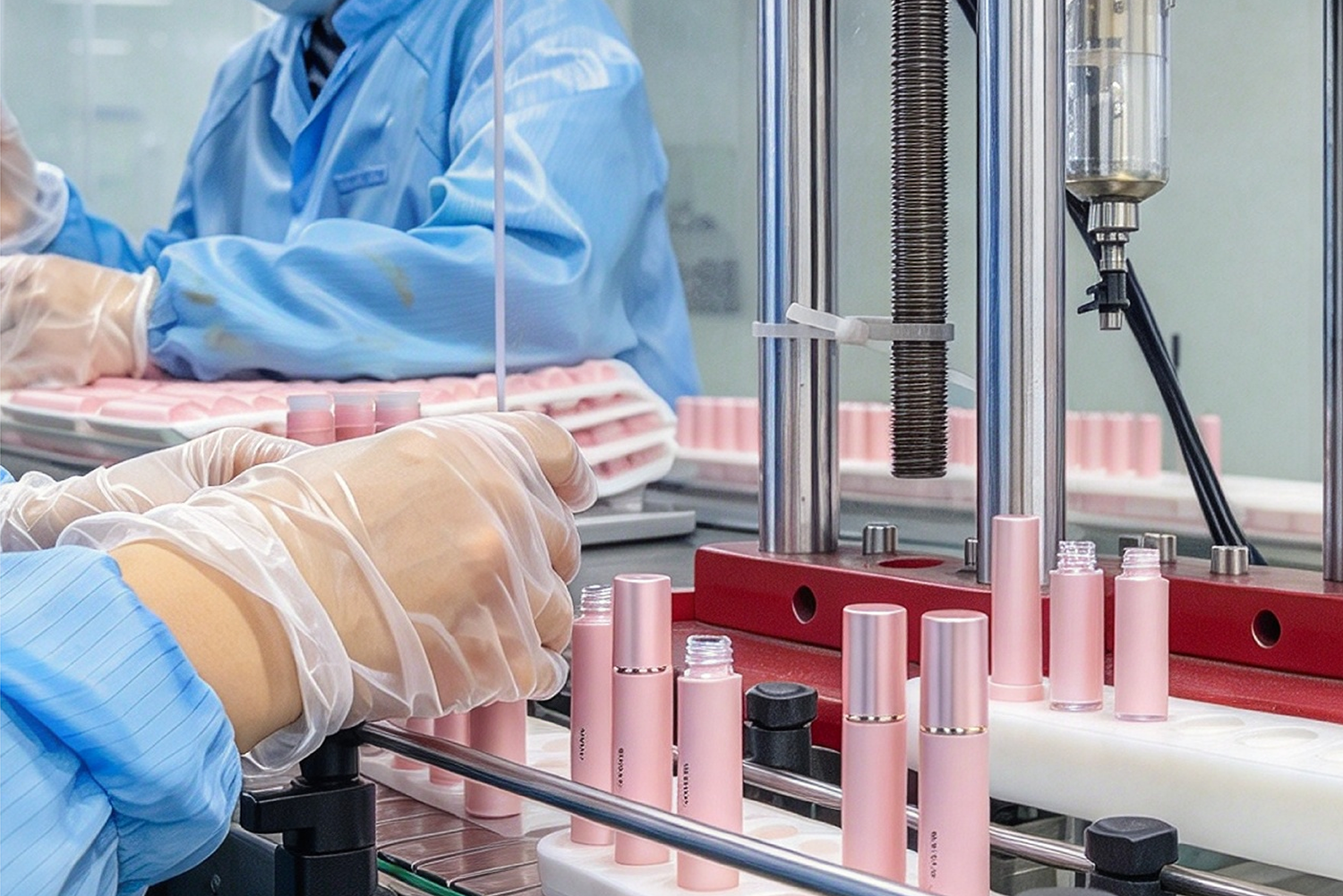
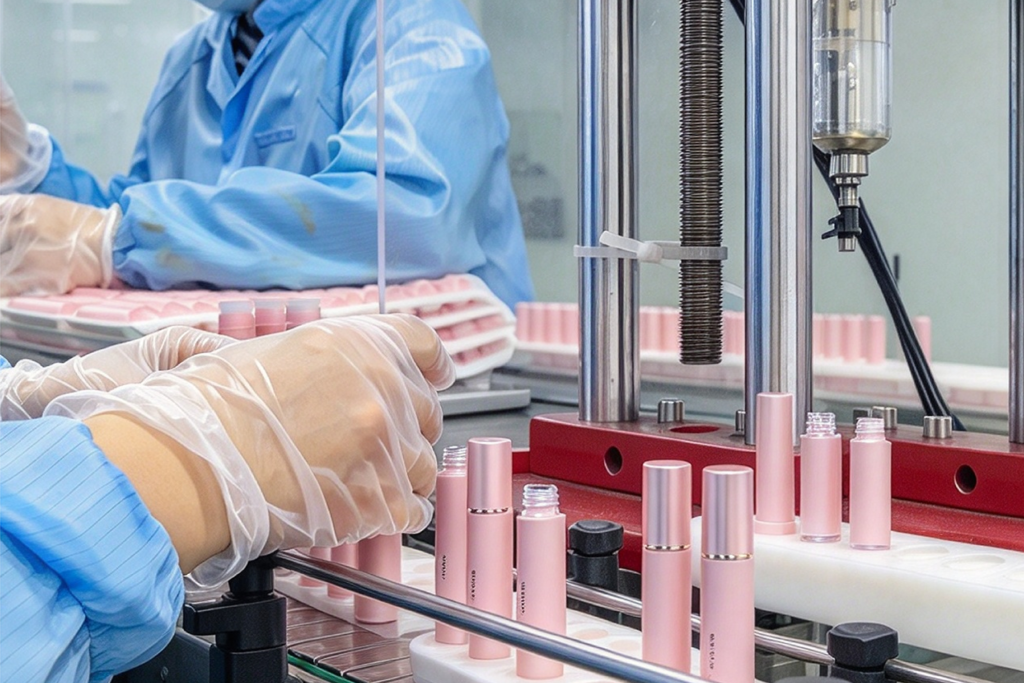
Ask what checks are planned for incoming materials, mixing, filling and finished goods. Which results are recorded for each batch? Who reviews a result that falls outside the agreed specification, and what must happen before that batch is released? These answers tell you more than a general claim that the factory has quality control.
Batch numbers, production records and retained samples, where applicable, remain useful after delivery. If a customer reports a difference in shade or texture, those records help both teams trace the relevant batch and compare it with the approved reference. They also provide a clear starting point for checking future repeat orders.
6. Clarify UK market documentation and responsibilities
If you plan to sell in Great Britain, identify the UK-established Responsible Person for the product. That person must keep the Product Information File (PIF), ensure the product has been assessed by a qualified safety assessor, and notify the Office for Product Safety and Standards through the SCPN service before the product is made available to consumers. Northern Ireland follows a different route under EU cosmetics rules, so define your sales markets at the start of the project.
Ask the manufacturer what information it can provide for the final formula and packaging, including ingredient details, manufacturing records, relevant test results and labelling information. Then agree who will compile the PIF, arrange the safety assessment, review the label and submit the notification. Record those responsibilities and document deadlines in the project plan.
If production takes place overseas, also confirm which legal entity will act as the Responsible Person and how the required information will reach them. A UK sales contact may coordinate the project, while regulatory responsibilities sit with a different party. Review the GOV.UK guidance for Great Britain and the SCPN notification process for the applicable requirements.
7. Get a full breakdown of MOQ and project costs
Ask each supplier to quote against the same product brief. A useful quotation states the formula route, number of shades, packaging specification, testing scope, order quantity, currency and delivery terms. It should separate development and sampling fees, custom tooling, decoration and freight from the unit price. Ask which changes would require a revised quote.
Check how the manufacturer’s MOQ is calculated. Does it apply to each product, formula or shade, or to the order as a whole? Custom components and printing may have separate minimums. If you expect to replenish individual shades, ask whether the same MOQ applies to repeat orders. For example, ZM Cosmetic Lab’s FAQ states a general minimum of 3,000 units in total, with at least 1,000 units per colour/SKU. Product format, formula and packaging may change the final requirement, so the written quotation should state the MOQ for your specific project.
For overseas production, confirm the delivery destination and who is responsible for freight, customs clearance and import charges.
8. Confirm lead times, communication and change control
Ask for a schedule built around approval points, rather than a single quoted lead time. It should separate formulation and sampling, packaging procurement, relevant testing, artwork approval, bulk production and shipment. Check which dates depend on your team’s approval, and how an additional sample round or delayed component would affect the schedule.
Agree on a named project contact, an update frequency and a written record of decisions. If a sample misses the brief or a component becomes unavailable, establish who will propose alternatives and when you will receive a revised plan.
Changes after sample or artwork approval can affect price, MOQ, testing and delivery. Before approving a revised specification, ask the manufacturer to explain those effects in writing, including whether new samples or compatibility checks are needed.
9. Check production location, export and replenishment fit
Review the production route behind each supplier’s proposal, whether the company is based in the UK or overseas. Ask where formulation, manufacturing, filling, assembly and final inspection take place, and which company is responsible for each stage. Record the role of any sales or regional office separately from the manufacturing site.
Use the same questions to compare both routes. Which steps take place at the named facility, and which involve another partner? How will finished goods reach your delivery point, and who is responsible at each handover? Where a shipment crosses a border, agree on export, freight and import responsibilities in writing. Confirm how the country of origin will be stated in the relevant product and shipping documents.
The route also needs to work for repeat orders. Ask whether the approved formula, shades and packaging components will remain available, what forecast the supplier needs, and how far ahead you must place a reorder. If shades sell at different rates, check whether you can replenish them in the quantities your business requires.
Compare supplier proposals against the same brief
Send the same product brief to each shortlisted supplier. Their quotations may cover different services, even when the proposed product looks similar. For each item below, note what has been confirmed, what depends on a later decision, and what remains unanswered.
| Compare | Ask to see |
|---|---|
| Product and development route | Relevant product experience, proposed formula route and sampling plan |
| Approved product standard | Reference sample, written specification and acceptance criteria |
| Production and quality | Manufacturing site, inspection plan and current audit or certification documents where cited |
| UK market responsibilities | Required document list and named parties responsible for the PIF, safety assessment and notification |
| Commercial terms | Itemised quotation, MOQ by SKU and component, development costs and delivery terms |
| Repeat supply | Component availability, reorder quantities and planning lead time |
Some answers will remain conditional until a formula or component is selected. Ask what will confirm each open point and when. The same approach lets you compare a UK private label makeup manufacturer with an overseas OEM or ODM partner on the scope each one has actually proposed.
Choosing a manufacturing partner for your UK brand
Once suppliers have responded to the same brief, review what each has committed to in writing: the production location, approved product specification, UK market documentation responsibilities, itemised costs, MOQ and reorder terms. If an item is still conditional, establish who will confirm it and when.
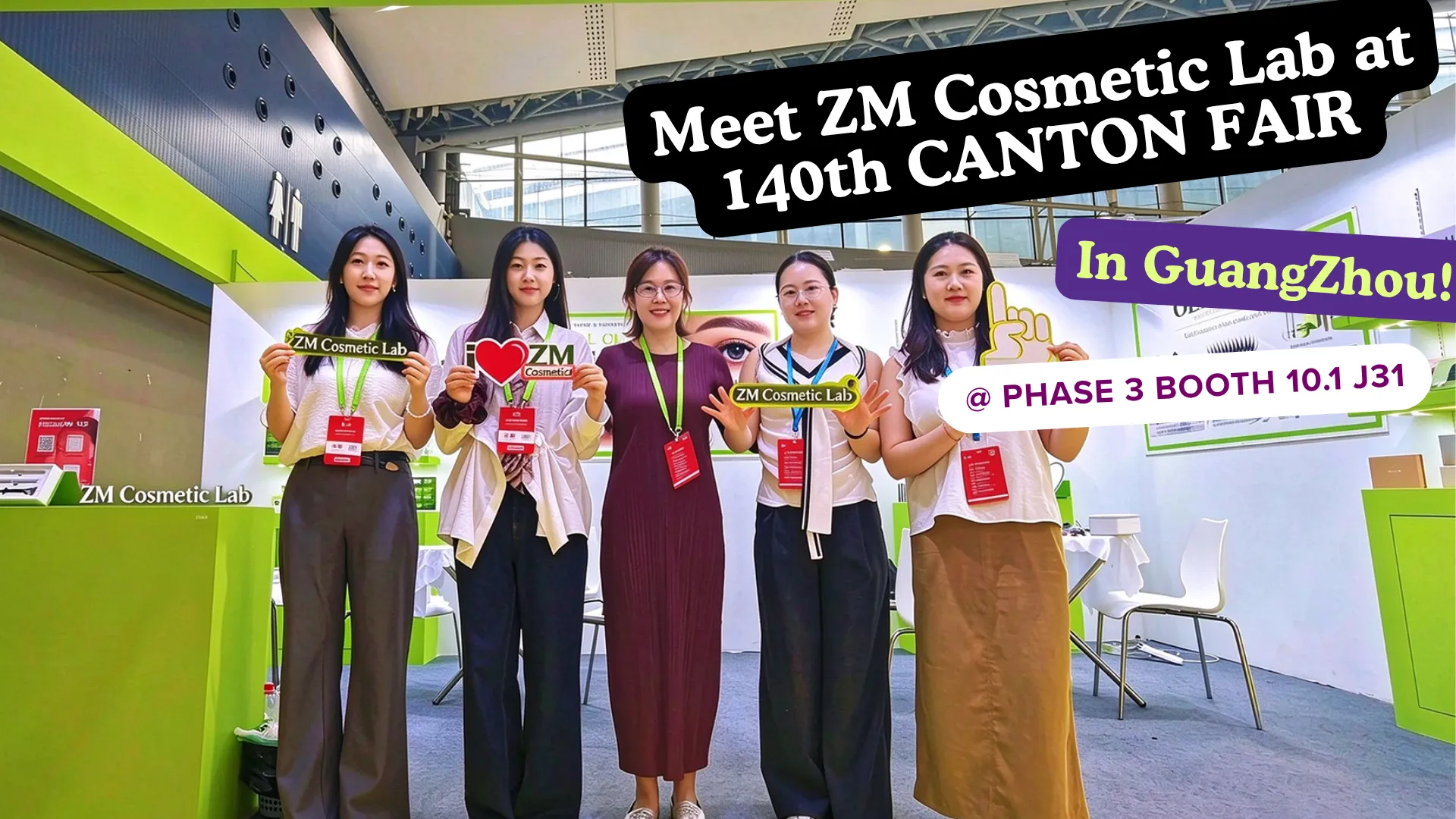
ZM Cosmetic Lab supports private label, OEM and ODM projects across lip, face and eye makeup. Its website describes manufacturing capabilities in Guangzhou and South Korea, with a UK office for communication with European clients. The production route and support available for a particular product should be confirmed in its project proposal.
For a UK-market project, share the product format, target market, shade direction, packaging requirements, estimated quantity and launch window through the ZM Cosmetic Lab enquiry page. The team can then review whether its development and manufacturing route fits your brief.